U.S. Can't Have The 65 mpg Ford "ECOnetic"
7:48 AM
If ever there was a car made for the times, this would seem to be it: a sporty subcompact that seats five, offers a navigation system, and gets a whopping 65 miles to the gallon. Oh yes, and the car is made by Ford Motor, known widely for lumbering gas hogs.
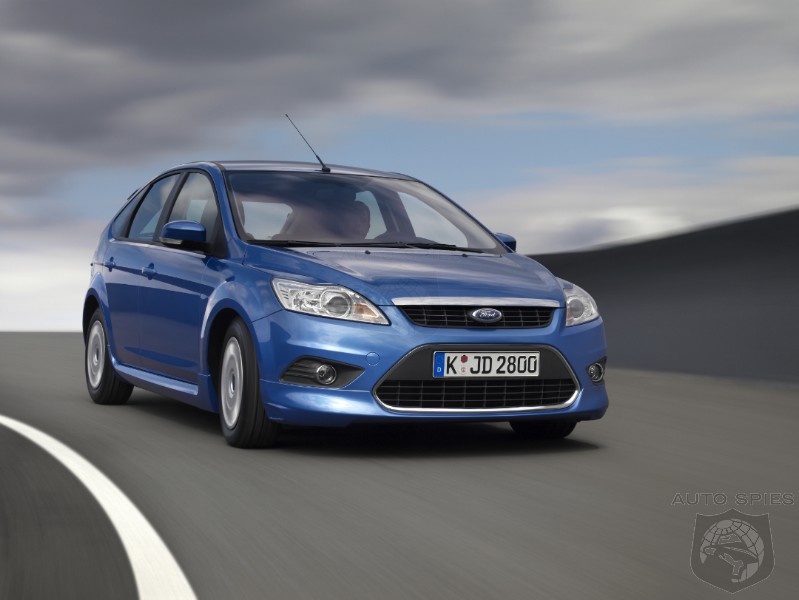
Ford's 2009 Fiesta ECOnetic goes on sale in November. But here's the catch: Despite the car's potential to transform Ford's image and help it compete with Toyota Motor and Honda Motor in its home market, the company will sell the little fuel sipper only in Europe. "We know it's an awesome vehicle," says Ford America President Mark Fields. "But there are business reasons why we can't sell it in the U.S." The main one: The Fiesta ECOnetic runs on diesel.
Forex 101
- What is Forex
- Why Trade Foreign Currencies?
- What Tools Do I Need to Start Trading Forex?
- Is Forex Legitimate?
Yet while half of all cars sold in Europe last year ran on diesel, the U.S. market remains relatively unfriendly to the fuel. Taxes aimed at commercial trucks mean diesel costs anywhere from 40 cents to $1 more per gallon than gasoline. Add to this the success of the Toyota Prius, and you can see why only 3% of cars in the U.S. use diesel. "Americans see hybrids as the darling," says Global Insight auto analyst Philip Gott, "and diesel as old-tech."
None of this is stopping European and Japanese automakers, which are betting they can jump-start the U.S. market with new diesel models. Mercedes-Benz by next year will have three cars it markets as "BlueTec." Even Nissan and Honda, which long opposed building diesel cars in Europe, plan to introduce them in the U.S. in 2010. But Ford, whose Fiesta ECOnetic compares favorably with European diesels, can't make a business case for bringing the car to the U.S.
Too Pricey to Import
First of all, the engines are built in Britain, so labor costs are high. Plus the pound remains stronger than the greenback. At prevailing exchange rates, the Fiesta ECOnetic would sell for about $25,700 in the U.S. By contrast, the Prius typically goes for about $24,000. A $1,300 tax deduction available to buyers of new diesel cars could bring the price of the Fiesta to around $24,400. But Ford doesn't believe it could charge enough to make money on an imported ECOnetic.
Ford plans to make a gas-powered version of the Fiesta in Mexico for the U.S. So why not manufacture diesel engines there, too? Building a plant would cost at least $350 million at a time when Ford has been burning through more than $1 billion a month in cash reserves. Besides, the automaker would have to produce at least 350,000 engines a year to make such a venture profitable. "We just don't think North and South America would buy that many diesel cars," says Fields.
More Links:
What is L-Carnitine ?
Saturn Moon has Liquid on Surface
Food to Feed Your Brain
The question, of course, is whether the U.S. ever will embrace diesel fuel and allow automakers to achieve sufficient scale to make money on such vehicles. California certified VW and Mercedes diesel cars earlier this year, after a four-year ban. James N. Hall, of auto researcher 293 Analysts, says that bellwether state and the Northeast remain "hostile to diesel." But the risk to Ford is that the fuel takes off, and the carmaker finds itself playing catch-up—despite having a serious diesel contender in its arsenal.
Source: Yahoo Finance
Future Cars: Cars of Tomorrow
7:45 AM
 Overview
Toyota’s 1/X, which debuted at the 2007 Tokyo Auto Show, is a lightweight, 4-door tribrid—meaning it can use three different fuels for propulsion: electricity, conventional gasoline, and ethanol (E85). It is named the 1/X because it “weighs only ‘1/Xth’ that of other vehicles in its class.”
Despite Toyota’s emphasis on her nifty powertrain, they also gave consideration to safety, space and weight efficiency. Consequently, the 1/X is sporting some impressive specs.
What We Like
• The Flex-Fuel engine. FFV technology—Flex-Fuel—allows the use of E85, a blend of 85% ethanol and 15% gasoline. Also called bioethanol, E85 is a high octane fuel that substantially lowers carbon dioxide emissions compared to conventional gasoline.
• The plug-in. Coupled with the flex-fuel engine, the plug-in battery addition gives the Toyota 1/X a unique and enviable powertrain.
• The safety. The body frame’s rigid carbon fiber reinforced plastic (CFRP) should make for outstanding collision safety.
• The roof. Made out of a bio-plastic derived from plant material (kenaf and ramie), it improves heat insulation, reduces noise and increases the amount of light entering the cabin
More Links:
What is L-Carnitine ?
Saturn Moon has Liquid on Surface
Food to Feed Your Brain Overview
Loremo is a portmanteau for ‘low resistance mobile’ and the vehicle made big headlines at the Geneva Auto Show in 2006 when it boasted of a jaw-dropping 157 mpg. The Germany-based company hopes to make it, along with the sportier GT model, the world’s first mass-market ultralight vehicles.
Recently they announced production plans for an all electric car model, the E-Loremo, with hopes of a prototype in mid-2008. Although they have offered up a number of proposed specs for this vehicle in the company blog, they read a bit like they’re winging it, and as you'll note below, they aren’t very good at accurately estimating specs. So we’ll side-step the electric model for now and focus on the original.
What We Like
• The wing door. There are concerns that, on a rainy day your interior will get wet when open. To their credit, Loremo responds in their FAQ: “Driving pleasure was the more important factor to us. After all, how many days will there be, when it rains so heavily, that the front seats will be affected by water?”
• The seating configuration. As a 2+2, the Loremo rear seats are either folded up for truck space or, as seats prove not quite big enough for your average adult, but in the event you can fit back there, do it—the seats are mounted facing the rear window. Fun ride! A great distraction for otherwise unruly kids as well.
• The crash-resistant frame. Thanks to energy-transferring, front-to-back steel girders and a single crossbeam, the frame weighs less than half that of other cars, without a compromise in safety.
• The price. Despite some fluctuations, the current estimate of 15,000 Euros amounts to about US $22,000 ofr the Loremo. This is a consumer-friendly price that, coupled with the vehicle’s mpg, dynamic profile and trunk space, suddenly makes the Loremo cost-efficient (in re fuel), good-looking and reasonably practical.
Forex 101
- What is Forex
- Why Trade Foreign Currencies?
- What Tools Do I Need to Start Trading Forex?
- Is Forex Legitimate?
Overview
Norway-based manufacturer Think successfully previewed the Think City at the 2008 Geneva Auto Show, and having recently been on the receiving end of a few million dollars from GE, the vehicle shows no signs of slowing down. Currently there are about 1200 Think vehicles driving the streets of Norway.
 What We Like
• The materials. According to the company web site, the Think City is made of 95% recyclable material, and “the car itself is designed to be recycled”. You don’t see that claim very often.
• The clever, and honest, marketing copy. The Think City says what few others do—that, as an electric car that plugs into the grid, it is not a zero emissions vehicle when you consider the source of that energy. Instead, the Think City is a “zero local emissions” vehicle. Bravo.
• The safety. ABS brakes, airbags, side impact bars in the doors, and those are just for starters. Granted when you make a car this small, safety will automatically come to mind to wary consumers, but the Think City is armed with about as much as she can handle.
• The 2+2. This option elevates the Think City into a practical electric car.
TECH NEWS ONLINE
Is Forex Legitimate?
7:34 AM
Is this regulated by any government agency?
Yes. If you trade with a Philippine broker, they have to be regulated by SEC ( Security and Exchange Commission ), however if you trade with an offshore broker ( a broker outside the Philippines), the broker must be registered in the particular country that they are based and they must also be a registered on FCM ( Futures Commissions Merchant ) regulated by the Commodities and Futures Trade Commission (CFTC) and the National Futures Association.
More Links:
What is L-Carnitine ?
Saturn Moon has Liquid on Surface
Food to Feed Your Brain





